
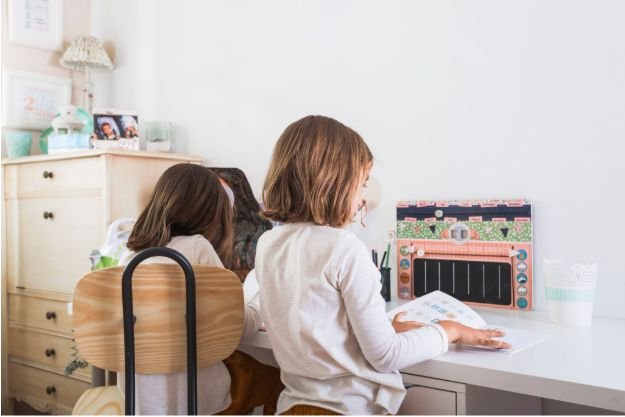
A daily homeschool routine for elementary students should feel structured enough to guide the day, but flexible enough to fit real family life. In the US, many homeschool families balance lessons with work schedules, younger siblings, co-ops, sports, errands, and household responsibilities. That is why a strong routine should not copy a full public school day at home.
Most elementary children do not need six hours of formal academics. A successful homeschool day often includes two to three hours of focused learning, plus movement, reading, chores, outdoor time, and creative exploration. When I plan a homeschool rhythm, I focus on short lessons, predictable blocks, and enough breathing room to prevent burnout.
Why a Simple Homeschool Routine Works Best
Elementary students learn better when they know what comes next. A routine lowers resistance because children understand the flow of the day. Breakfast leads to chores, chores lead to morning learning, and core subjects happen before energy drops.
A routine also helps parents stay consistent. Without a plan, math can stretch too long, reading may get skipped, and the whole day can feel unfinished. With a simple homeschool daily schedule, families can complete the most important work early and still leave space for real-life learning.
Sample 4-Hour Homeschool Daily Rhythm
This sample rhythm works well for many elementary families because it keeps formal learning focused while still giving children time to move, rest, and explore.
Morning Launch and Togetherness

Start around 8:30 a.m. with breakfast, getting dressed, brushing teeth, making beds, and simple chores. This helps children shift into the day without rushing. After that, begin with a morning basket or family learning time.
Morning baskets can include a read-aloud novel, poetry, calendar review, memory work, character lessons, or an age-appropriate current events segment. Some families also add a short walk, stretching, or kid-friendly yoga to wake up the body and brain. I like this block because it creates connection before independent work begins.
High-Focus Core Subjects
From about 9:30 a.m. to 11:00 a.m., focus on the subjects that need the most attention. Math usually works best first because children often have stronger focus earlier in the day. A 30 to 45-minute math block is usually enough for many elementary students.
After math, add a short snack and movement break. Then move into language arts, such as phonics, reading practice, handwriting, spelling, grammar, or writing. Early elementary students may need lessons as short as 15 to 20 minutes, while upper elementary students may handle 30 to 45 minutes.
Loop Subjects and Exploration
From 11:00 a.m. to 12:00 p.m., use a loop schedule for subjects that do not need daily instruction. Instead of forcing science, history, geography, art, music, and coding into every day, rotate them across the week.
For example, history or geography can happen on Monday and Wednesday. Hands-on science or beginner coding can happen on Tuesday and Thursday. Friday can be used for art projects, music practice, nature journaling, library trips, or review work. This keeps the week rich without making the daily routine overwhelming.
Hands-on learning matters at this age. Children remember more when they build, draw, cook, experiment, map, observe nature, or discuss what they read. A good homeschool routine should include both bookwork and active learning.
This balanced approach fits well within a homeschool schedule for working parents, allowing lessons to remain engaging while making it easier to combine structured learning with flexible, real-life activities that fit around work responsibilities.
Lunch and Quiet Recharge

Around noon, pause for lunch and simple cleanup chores. After lunch, quiet time gives everyone a reset. Children can read independently, listen to audiobooks, draw, work on puzzles, or rest.
This quiet block is especially helpful for parents who work from home or need time to prepare for the afternoon. It also teaches children how to enjoy calm independent activities without constant direction.
Flexible Homeschool Schedule for Working Parents
A daily homeschool routine for elementary students can still work if parents have jobs, appointments, or unpredictable schedules. The key is to protect the core subjects and stay flexible with the rest.
Some families complete math and reading early in the morning before work. Others split the day into morning and afternoon blocks. A visual checklist can help children complete independent tasks while a parent handles work responsibilities. The checklist may include chores, math review, handwriting, reading goals, and quiet projects.
Rules That Make the Routine Easier
The first rule is to focus on rhythm, not strict times. You do not need to move at exactly 9:30 or 11:00 every day. Move to the next block when the task is complete and your child is ready.
The second rule is to keep lessons short. Young children learn best in focused bursts. Long lessons often create frustration, while short lessons with breaks keep momentum strong.
The third rule is to let children keep their hands busy during listening time. Drawing, playdough, LEGO bricks, coloring, or quiet building can help some children process read-alouds, history, or literature more easily.
The fourth rule is to use independent checklists. A simple visual routine builds responsibility and reduces repeated reminders. Over time, children learn to manage small parts of their homeschool day with more confidence.
Common Mistakes to Avoid

One common mistake is trying to recreate a traditional school day at home. Homeschooling is often more efficient because lessons are focused and personalized.
Another mistake is skipping breaks. Elementary students need movement, snacks, conversation, and outdoor time. Breaks are not wasted time; they help children return to learning with better focus.
It is also easy to overload the day with too many subjects. Start with math, reading, writing, and one rotating subject. Then add extras when the routine feels steady.
Frequently Asked Questions (FAQs)
1. How long should elementary homeschool take each day?
Most elementary homeschool students do well with two to three hours of formal academics, plus reading, play, chores, and enrichment activities.
2. What should I teach every day in elementary homeschool?
Math, reading, and writing are the best daily subjects. Science, history, geography, art, music, and nature study can rotate through the week.
3. What is the best homeschool schedule for beginners?
The best beginner schedule includes a morning routine, core learning block, movement break, loop subject, lunch, quiet time, and afternoon free play.
4. How do I make a daily homeschool routine for elementary students work long term?
Keep the routine simple, use short lessons, add movement, rotate secondary subjects, and adjust the schedule when your family’s needs change.
Final Thoughts
A daily homeschool routine for elementary students should help your home feel calmer, not more pressured. I believe the best routines give children structure while still leaving room for curiosity, creativity, outdoor time, and family life.
You do not need a perfect schedule to homeschool well. You need a repeatable rhythm that helps your child learn consistently and helps your family move through the day with less stress.