Homeschool outdoor learning activities can turn an ordinary school day into a fresh, hands-on learning experience. I like outdoor lessons because they help kids move, observe, ask questions, and remember what they learn instead of only completing indoor worksheets.
For many American homeschool families, nature is one of the easiest classrooms to use. A backyard, sidewalk, local park, porch, garden, or nature trail can support science, math, reading, writing, art, and physical education.
Outdoor learning also supports daily movement, which matters because the CDC recommends at least 60 minutes of physical activity each day for children ages 6 to 17.
Why Outdoor Learning Helps Homeschool Kids Focus Better
Outdoor learning works because it connects lessons to real life. When a child tracks a shadow, measures a tree trunk, studies insects, or writes under a shade tree, the subject feels more meaningful.
Nature-based learning can also break the monotony of indoor bookwork. Research links time in nature with benefits for cognitive function, mental health, physical activity, and overall well-being. For homeschool parents, that means outdoor lessons can support both academics and a calmer daily rhythm.
Easy Backyard Science and Nature Exploration Ideas
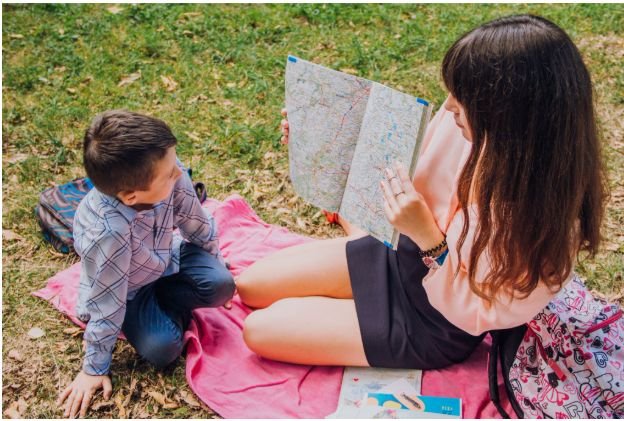
Science becomes more exciting when kids can touch, collect, observe, and compare. Start with plant identification. Download a plant ID app and let your child catalog flowers, weeds, trees, or shrubs in your yard or local park. This turns a simple walk into a botany lesson.
Tactile journey sticks are another fun nature study activity. During a walk, children collect safe natural items such as leaves, feathers, small twigs, or seed pods. Then they attach them in order to a sturdy stick using rubber bands or string. Later, they can retell the walk from memory.
This simple project also makes an excellent choice for weekend family activities, encouraging parents and children to explore nature together while building observation skills, creativity, and lasting memories outdoors.
For a bug observation lesson, hide toy insects in the garden or carefully observe real insects without harming them. Kids can use tweezers to collect toy insects or place real finds in a viewing jar for a short time before releasing them. This builds fine motor skills, observation, and early biology vocabulary.
Shadow tracking is also simple and powerful. Place a stick upright in the ground on a sunny day and trace the shadow with chalk every hour. Children can see how the sun’s position changes and begin to understand time, direction, and Earth’s rotation.
Outdoor Math and Geometry Activities for Homeschool Students
Outdoor math activities help children see numbers in action. A yard measurement hunt is an easy place to begin. Give your child a ruler, tape measure, or string and ask them to measure rocks, leaves, tree trunks, garden beds, sidewalks, or outdoor toys. They can estimate first, then compare their guesses with actual measurements.
Target value toss turns math facts into movement. Place buckets at different distances and assign each one a point value. Children toss balls, beanbags, or pinecones, then add, subtract, multiply, or sequence their scores. This works well for active kids who need movement during lessons.
Sandbox fraction pies are useful for visual learners. Draw circles in damp sand and divide them with sticks into halves, thirds, fourths, and eighths. Children can physically move pieces of the circle, making fractions easier to understand.
Outdoor Reading and Language Arts Activities
Outdoor reading and writing can make language arts feel less forced. Open-air storytime is one of the simplest options. Take your current read-aloud outside and read on a porch, under a tree, or on a picnic blanket. Afterward, ask your child to describe what they heard, smelled, saw, or felt while listening.
Chalk flower watering is great for early readers. Draw large sidewalk chalk flowers and write letters, phonics sounds, sight words, or spelling words inside them. Call out a sound or word, and let your child “water” the correct flower with a spray bottle.
The water eraser game works well for vocabulary and spelling. Write words on a fence, sidewalk, or driveway with chalk. Give your child a water squirter and define a word, say a synonym, or call out the spelling pattern. They erase the correct answer with water.
These simple homeschool outdoor learning activities are especially helpful for children who learn better through movement, sound, and sensory play.
Outdoor Art and Sensory Learning Activities
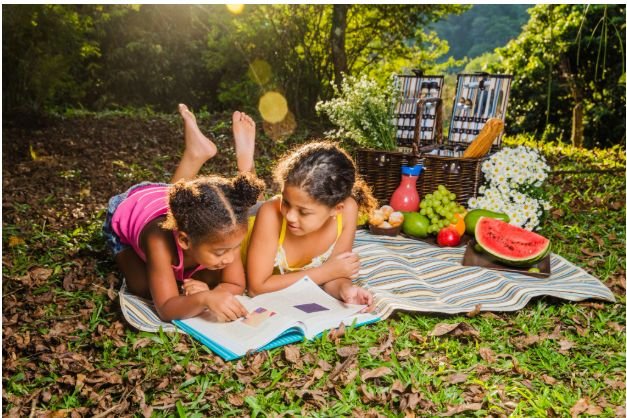
Art is one of the easiest subjects to take outside because mess matters less outdoors. Water chalk painting is a quick win. Dip regular pavement chalk into water before drawing. The wet chalk creates a rich, paint-like texture that makes outdoor artwork brighter.
Sun prints are another easy project. Place flat leaves, flowers, or lace stencils on construction paper and leave them in direct sunlight for several hours. The sun fades the exposed paper and leaves a natural print behind.
Nature texture rubbings also work for many ages. Place paper over bark, stones, leaves, or outdoor surfaces. Then use the flat side of a crayon to rub across the paper and reveal the texture. This activity builds observation, art skills, and sensory awareness.
Homeschool Gardening Activities for Real-Life Learning
Gardening gives children a practical way to study science, responsibility, nutrition, and patience. Even a small container garden can become a living lesson.
Kids can plant seeds, water them, measure growth, compare sunlight, observe roots, and record changes in a garden journal. They can also learn which herbs, flowers, fruits, or vegetables grow best in their region.
For math, children can count days until seeds sprout or measure plant height each week. For writing, they can describe what changed in the garden. For science, they can study soil, pollination, insects, and the plant life cycle.
Outdoor STEM Activities That Build Problem-Solving Skills
Outdoor STEM activities help children build, test, redesign, and think critically. Ask your child to build a small bridge using sticks, string, cardboard, or recycled materials. Then test how much weight it can hold and discuss how to improve the design.
You can also make a simple rain gauge, bird feeder, sundial, or obstacle course. These projects combine science, engineering, measurement, and creativity without requiring expensive supplies.
How to Plan Outdoor Lessons Without Stress
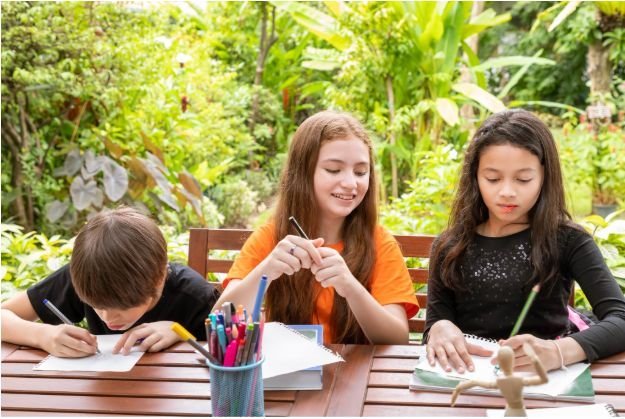
The best way to begin is to keep it simple. Choose one subject, one outdoor space, and one short activity. A 15-minute chalk spelling game, a 20-minute nature walk, or a quick backyard science observation can be enough.
I also recommend keeping a small outdoor learning bag ready with pencils, a notebook, crayons, measuring tape, magnifying glass, sunscreen, water bottles, and basic first-aid supplies. This makes it easier to step outside without turning preparation into another chore.
Frequently Asked Questions (FAQs)
1. What are the best homeschool outdoor learning activities for kids?
The best activities include nature walks, shadow tracking, chalk spelling games, outdoor math toss, gardening, bug observation, nature journaling, and texture rubbings.
2. How can I teach outside without a large backyard?
You can use a porch, driveway, sidewalk, balcony, public park, library lawn, community garden, or nearby walking trail.
3. Are outdoor homeschool activities good for preschoolers?
Yes. Preschoolers benefit from sensory play, nature walks, chalk games, counting rocks, watering plants, and simple observation activities.
4. How often should homeschool families do outdoor learning?
Many families start with one or two outdoor lessons each week, then add more when the weather, schedule, and child’s interest allow.
Final Thoughts
Homeschool outdoor learning activities make education feel active, practical, and memorable. I believe outdoor lessons work best when they stay simple and connected to real life. Whether you use a backyard, sidewalk, park, garden, or trail, nature can help your child learn with more curiosity, movement, and joy.