

I used to think a calm home meant everything had to be spotless, quiet, and perfectly scheduled. Then real family life happened. Backpacks landed on chairs, laundry piled up, dinner felt rushed, and everyone needed something at the same time.
That is why learning how to reduce chaos in a busy family home is not about chasing perfection. It is about creating small systems that make everyday life easier, calmer, and more predictable.
Why Busy Homes Feel So Chaotic
Most family chaos does not come from one big problem. It usually builds from dozens of small decisions. What is for dinner? Where are the shoes? Who packed the school folder? Did anyone take out the trash? When every answer depends on one tired parent, the whole home starts to feel overwhelming.
A busy family home needs rhythm. Children feel more secure when they know what comes next, and parents feel less stressed when daily tasks are not constantly being decided from scratch. Simple routines, clear spaces, and sharing in family work can turn a loud, messy day into something more manageable.
Start With a Simple Morning Routine
Morning chaos can affect the entire day. A calm morning begins the night before. Clothes should be chosen, bags should be packed, lunch items should be ready, and keys should have one regular spot. These small habits reduce last-minute rushing.
A good morning routine does not need to be strict. It only needs to be repeatable. Wake up, get dressed, eat breakfast, brush teeth, grab bags, and leave. When children follow the same order every day, parents do not have to repeat instructions as often.
Visual checklists can help younger kids become more independent without constant reminders. These simple habits also reflect positive parenting tips for everyday family life, encouraging children to take responsibility, build confidence, and develop routines through gentle guidance rather than constant correction.
Create an Entryway Drop Zone

One of the fastest ways to reduce home mess is to control what comes through the door. Shoes, jackets, backpacks, mail, sports gear, and lunch boxes often create clutter because they do not have a clear home.
Set up a small family drop zone near the entrance. Use hooks for bags, a basket for shoes, a tray for keys, and a bin for school papers. This does not need to look fancy. It just needs to be easy enough for everyone to use. When the entryway works well, the rest of the home feels calmer.
Use the 15-Minute Family Reset
A full-home cleaning session can feel impossible on busy weekdays. A 15-minute reset is much more realistic. Set a timer and let everyone help. One person clears the living room, another loads dishes, another gathers laundry, and someone wipes the table.
The goal is not deep cleaning. The goal is restoring order before the mess takes over. This works especially well before dinner, before bedtime, or before guests arrive. Families are more likely to repeat habits that feel quick and doable.
Reduce Clutter Before Organizing
Many homes feel chaotic because there is simply too much stuff to manage. Buying more bins will not solve the problem if every drawer and closet is overflowing. Before organizing, remove items your family no longer uses, needs, or loves.
Start with easy categories such as broken toys, old papers, duplicate cups, outgrown clothes, and random kitchen items. Decluttering in small rounds is less stressful than trying to fix the whole house in one weekend. A calmer home usually starts with fewer things competing for space.
Build a Family Command Center

A family command center helps everyone see what is happening. It can include a wall calendar, weekly meal plan, chore list, school reminders, appointment notes, and important papers. Place it somewhere visible, such as the kitchen or hallway.
This reduces repeated questions and forgotten tasks. Children can check the calendar, parents can plan ahead, and the whole family can understand the week at a glance. For busy households, one shared information spot can prevent a lot of confusion.
Make Chores a Family System
Parents often feel overwhelmed because they carry the full mental load of the home. Children can help more than many adults realize when tasks are age-appropriate and clearly explained.
Younger kids can put toys away, match socks, wipe small spills, and place dishes near the sink. Older kids can fold laundry, unload the dishwasher, take out trash, prepare simple snacks, and help with pets. Chores should not feel like punishment. They should feel like part of belonging to the family.
When everyone contributes, the home becomes a shared space instead of one parent’s endless responsibility.
Plan Meals Before the Week Gets Busy
Dinner stress is one of the biggest sources of weekday chaos. A simple meal plan can make evenings smoother. Choose a few easy family meals, repeat favorites, and keep backup options for extra busy nights.
Theme nights can help. For example, pasta night, taco night, soup night, breakfast-for-dinner night, and leftovers night. Grocery shopping becomes easier when meals are already planned. It also reduces the last-minute question that drains so many parents: What are we eating tonight?
Create a Calmer Evening Routine
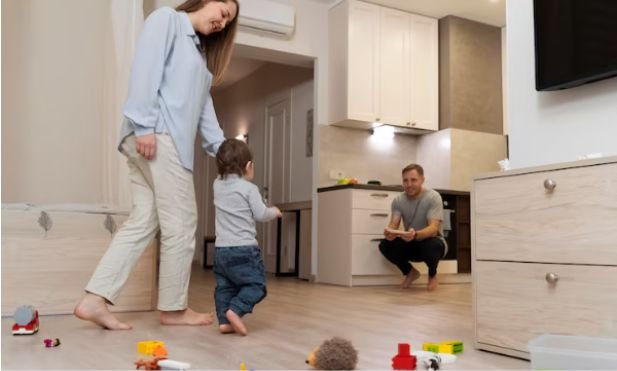
Evenings should help the family slow down, not create more stress. A predictable evening routine can include dinner cleanup, homework review, baths, pajamas, reading, and preparing for the next day.
The most important part is consistency. Children settle more easily when bedtime follows a familiar order. Parents also get a mental break when the evening does not feel like a new battle every night. A calm evening routine is one of the strongest tools for how to reduce chaos in a busy family home because it closes the day with structure.
Protect Quiet Moments
A busy family home will never be silent all the time, but it still needs quiet moments. This can be 10 minutes of reading, screen-free dinner, a slow weekend breakfast, or a short family walk.
Chaos often grows when everyone is overstimulated. Building small pauses into the day helps children reset and gives parents room to breathe. Calm does not have to last all day to matter. Even short moments can change the mood of the home.
Frequently Asked Questions
1. What is the fastest way to make a busy home feel calmer?
Start with a 15-minute reset, clear the main living area, and put daily items back in their assigned places.
2. How do I get kids to help more at home?
Give simple, age-appropriate chores, keep instructions clear, and make helping part of the daily routine.
3. How often should I declutter a family home?
A small weekly declutter works better than waiting until the entire house feels overwhelming.
4. What is the best routine for how to reduce chaos in a busy family home?
The best routine includes a morning checklist, entryway drop zone, meal plan, evening reset, and shared family chores.
Final Thoughts
I have learned that a peaceful home is not created by doing everything perfectly. It is created by making daily life easier to repeat. When shoes have a place, meals have a plan, kids know their routines, and everyone helps a little, the home starts to feel lighter.
The real goal is not a picture-perfect house. The goal is a home where people can find what they need, move through the day with less stress, and feel more connected. Small systems can create a big calm, even in the busiest family seasons.